'%20fill='%230c0755'/%3e%3cpath%20d='M19.412,5.307a2.4,2.4,0,0,1-2.527-2.378A2.506,2.506,0,0,1,21.9,2.92,2.387,2.387,0,0,1,19.412,5.307Zm-2.1,19.764L17.279,8.149l4.205-.007.028,16.922Z'%20transform='translate(-1.434%20-0.472)'%20fill='%230c0755'/%3e%3cpath%20d='M35,25.041,34.984,13.97c0-1.472-.635-2.487-2.177-2.484a5.644,5.644,0,0,0-3.85,2.143l.019,11.422-4.2.008L24.743,8.136l3.573-.006.39,2.382C30.28,9,32.065,7.773,34.342,7.769c3.153,0,4.839,1.919,4.844,5.073l.021,12.192Z'%20transform='translate(-1.434%20-0.472)'%20fill='%230c0755'/%3e%3cpath%20d='M52.708,31.528l-.014-8.409a6.724,6.724,0,0,1-4.8,2.251c-3.573.006-6.381-2.617-6.39-8.328-.011-6.237,3.347-9.15,8.428-9.159a21.351,21.351,0,0,1,6.939,1.109l.037,21.9ZM52.675,11.8a6.693,6.693,0,0,0-2.664-.486c-2.663,0-4.307,1.62-4.3,5.473.005,3.294,1.374,4.833,3.266,4.83a5.166,5.166,0,0,0,3.711-2.179Z'%20transform='translate(-1.434%20-0.472)'%20fill='%230c0755'/%3e%3cpath%20d='M70.777,24.98l-.39-2.381a8.266,8.266,0,0,1-5.636,2.742c-3.189,0-4.838-1.919-4.843-5.107L59.887,8.076l4.2-.007.018,11.072c0,1.471.636,2.451,2.142,2.449a5.8,5.8,0,0,0,3.886-2.109l-.02-11.422,4.2-.007.028,16.922Z'%20transform='translate(-1.434%20-0.472)'%20fill='%230c0755'/%3e%3cpath%20d='M91.717,17.307l-10.862.018c.216,3.293,1.97,4.727,4.563,4.722a9.853,9.853,0,0,0,5.812-2.111l.5,3.292a11.571,11.571,0,0,1-6.759,2.079c-4.73.008-8.273-2.684-8.284-8.781-.009-5.5,3.279-8.834,7.694-8.841,5.079-.009,7.364,3.806,7.372,8.606C91.75,16.641,91.716,17.062,91.717,17.307Zm-7.44-6.714c-1.682,0-3.046,1.336-3.356,4.105l6.727-.012C87.363,12.059,86.309,10.589,84.277,10.593Z'%20transform='translate(-1.434%20-0.472)'%20fill='%230c0755'/%3e%3c/g%3e%3cpath%20d='M86.432,29.765c7.2-.59,12.5-5.77,14.464-12.564,1.642-5.686,3.713-11.519,9.666-13.955,3.308-1.353,7.01-1.169,10.515-1.179-3.3.57-6.326,3.271-8.039,6.034-2.072,3.343-2.721,7.178-4.027,10.827a15.253,15.253,0,0,1-5.939,7.888,19.629,19.629,0,0,1-8.735,2.728C91.712,29.813,89.067,29.759,86.432,29.765Z'%20transform='translate(-1.434%20-0.472)'%20fill='%23ffc600'/%3e%3c/svg%3e)

 +Sinque
Weight loss is only the beginning.
Happy. Active. Healthier.
Exercise turns weight loss into a lifestyle journey. Garmin helps participants see their movement and physical capacity. Sinque helps the programme team see what those changes mean for the person's wellness plan.
Exercise changes the outcome
Weight loss reduces body mass. Exercise shapes what happens to health and physical capacity along the way.
Exercise delivers outcomes the scale cannot show.
Aerobic activity improves cardiorespiratory fitness and mobility. Resistance training helps protect muscle function and lean tissue during weight loss. Current obesity and GLP-1 guidance treats both as part of treatment — not as an optional extra.[1],[6]
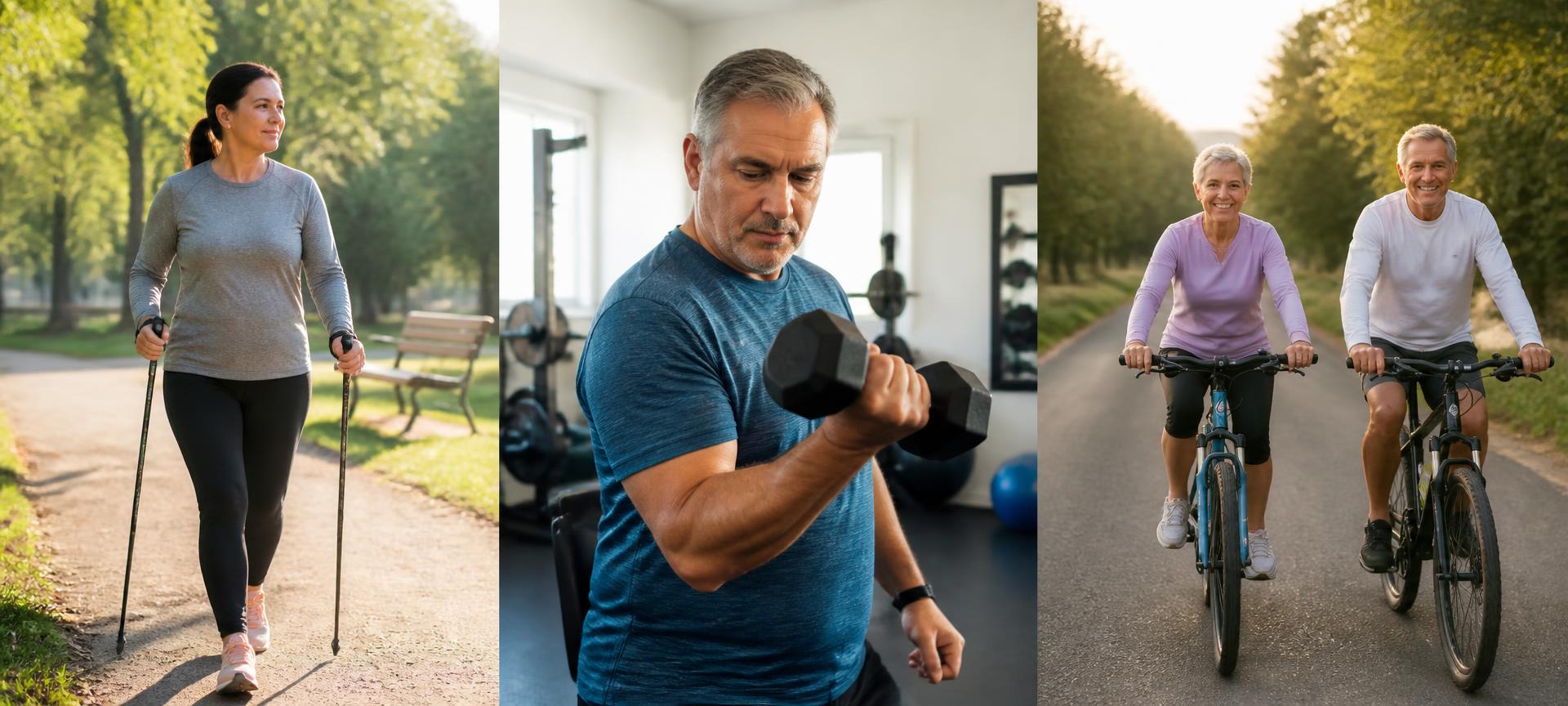
Protect physical function
Resistance exercise supports strength and helps preserve lean mass while weight comes down.
Improve cardiorespiratory fitness
Aerobic and combined training improve the body's capacity for sustained physical work.
Build the lifestyle after weight loss
Movement carries patients from treatment-driven weight loss to an active, sustainable routine.
Why this matters
GLP-1 medications can produce substantial weight loss, but medication alone does not necessarily improve fitness. Exercise is the part of the program that drives physical capacity.
In our evidence review, the strongest direct CPET data show no fitness gain from GLP-1 medication alone. Exercise is what changes that part of the outcome.[6]
What the scale — or body composition — cannot tell us
More muscle mass does not necessarily mean more strength.
Weight tells us how much the body has changed. Bioimpedance estimates fat mass and lean mass. Neither tells us whether the patient is getting stronger, fitter or more capable.[1],[2],[3]
Muscle function and muscle quantity are not the same thing. Modern muscle-health guidelines rank strength above mass, because strength predicts outcomes better. Physical performance adds a further dimension.[1]
A patient can lose some lean mass and still maintain — or improve — physical function. A favourable body-composition reading is not proof that strength or exercise capacity improved. Recent GLP-1 evidence points the same way: judge the quality of weight loss, not only the kilograms.[4],[5]
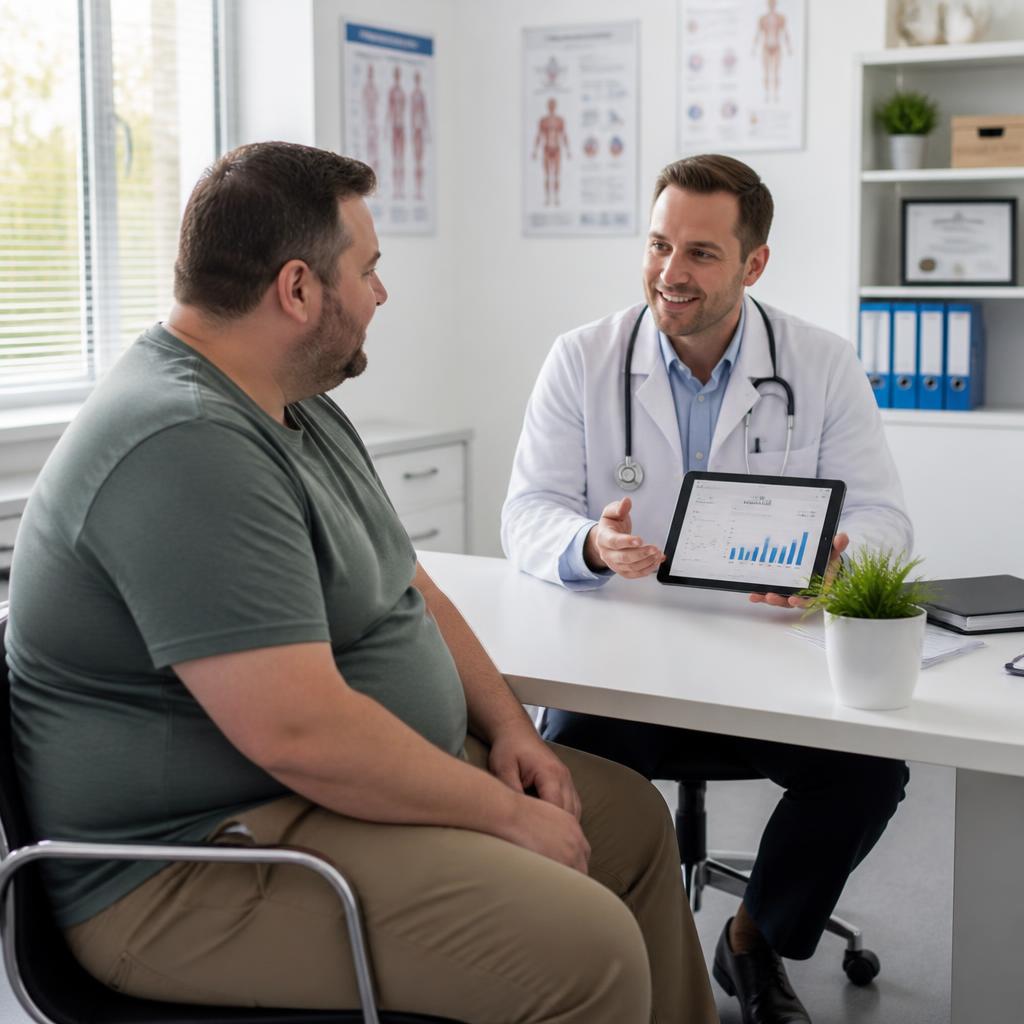
Scale
How much?
Bioimpedance
What is it made of?
Garmin + function
What can the body do?
That is why we add function to the picture.
The signals we follow together
Weight trajectory
How is body weight changing?
Body composition
How are fat mass and estimated lean mass changing?
Daily activity
Is the patient becoming more or less active?
VO₂max trend
Is exercise capacity improving, stable or declining?
Read together, these four signals show treatment progress that weight or bioimpedance alone would miss.
Why VO₂max
Weight tells us how much has changed. VO₂max helps us understand how physical capacity is changing.
Two patients can lose the same weight and end up with very different fitness.
VO₂max reflects cardiorespiratory fitness — how much oxygen the heart, lungs, circulation and working muscles deliver and use during exercise. It is useful next to weight, not as proof of muscle health, but as a sign that the patient is becoming more physically capable.[7],[1]
A stable or rising VO₂max is reassuring: functional fitness is holding or improving during weight loss. A sustained decline is a reason to review activity, exercise, nutrition and fatigue. Wearable VO₂max is an estimate read as a trend over time — not a laboratory measurement and not a measure of muscle mass.
VO₂max = oxygen used during exercise
Patient A
Interpretation
Weight is falling and physical capacity is improving with it.
Patient B
Interpretation
Weight is improving, but capacity and activity are falling. Review exercise, nutrition and fatigue.
Patient C
Interpretation
Weight has plateaued, but the patient is fitter and more active. This plateau is not automatically treatment failure.
The science
Why cardiorespiratory fitness deserves attention
A 2024 overview of 199 cohort studies and more than 20.9 million observations found cardiorespiratory fitness to be a strong and consistent predictor of morbidity and mortality.[8]
A later meta-analysis of fitness, BMI and mortality reached the same conclusion across every weight category.[7]
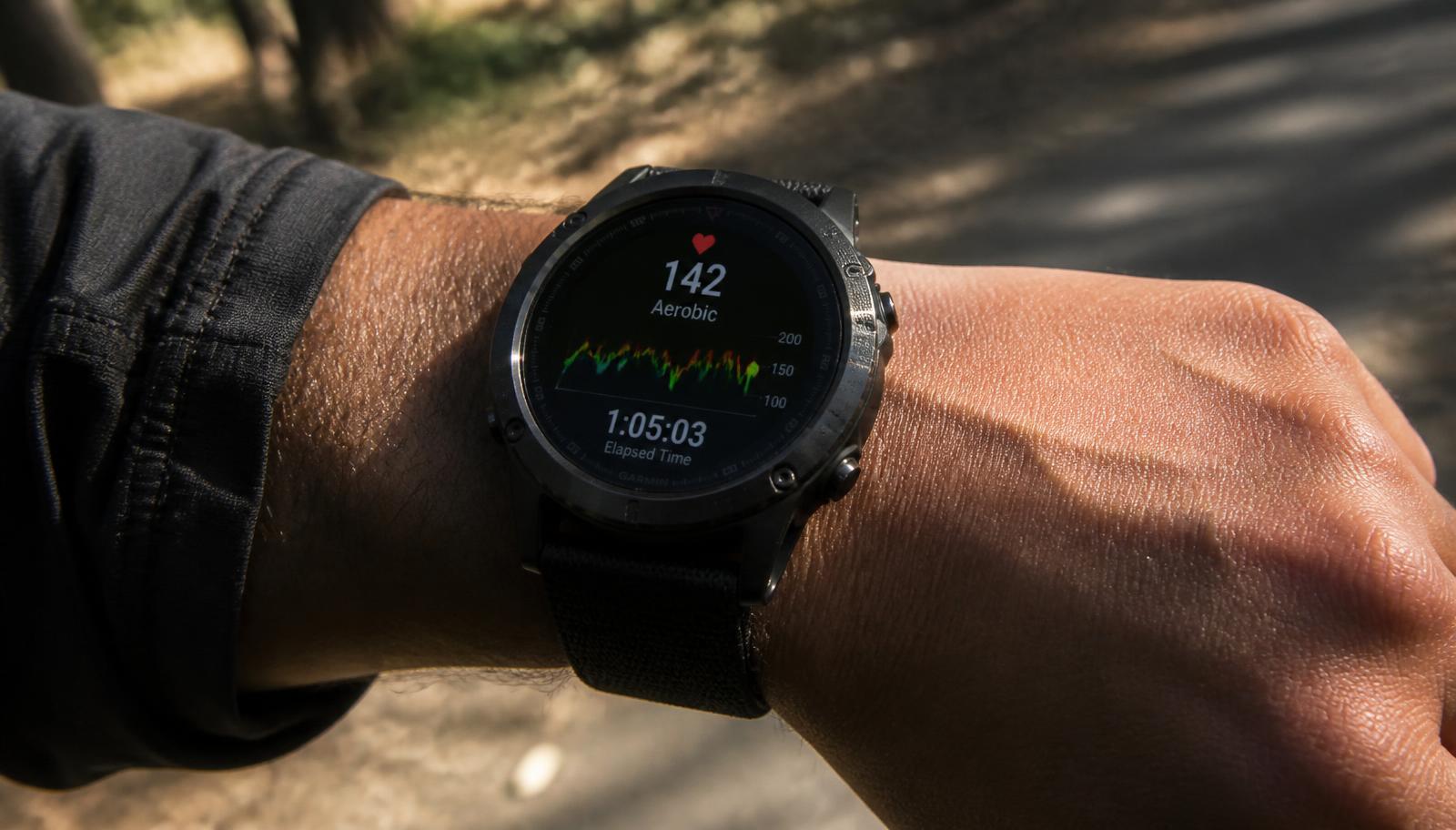
The division of responsibilities
Garmin shows how the patient is living.
Sinque helps the clinician understand what it means.
Garmin Connect remains the patient's health and fitness experience. Sinque uses only selected signals — initially daily activity and the VO₂max trend — to add context to obesity care.
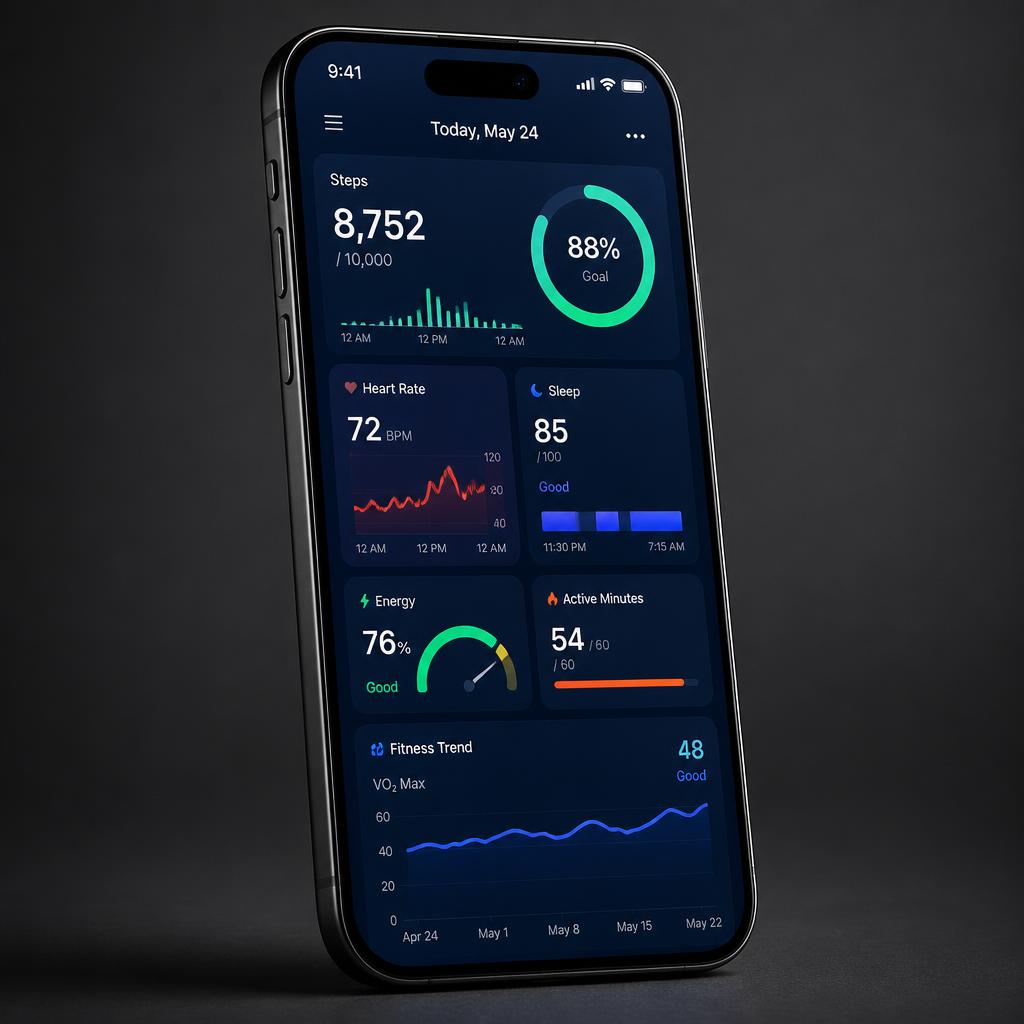
Movement, exercise, fitness, recovery and everyday health remain part of the Garmin experience.
Your Garmin journey continues in Garmin Connect.
Sinque does not reproduce Garmin data. It interprets selected trends in the context of treatment.
VO₂max trend
Is physical capacity improving, stable or declining?
Daily activity trend
Is movement increasing, stable or declining?
Combined with
Result
A more complete clinical view of progress.
“Weight is decreasing, but activity and VO₂max are declining. Worth reviewing the patient's exercise strategy and functional progress.”
Your Garmin experience stays Garmin.
Sinque does not recreate Garmin Connect. We use only the signals needed to add clinical context to the patient's follow-up.
How Sinque uses Garmin data
From wearable data to a better health conversation.
This supports lifestyle and quality-of-life programmes. It never guides changes to medical treatment.
Garmin measures
- VO₂max
- Daily activity
Sinque follows the trend
- Improving
- Stable
- Declining
Sinque places it in context
- Weight trajectory
- Monitoring adherence
- Programme context
The care team gets a read
- Not another wearable dashboard
- A reason to talk — or a reason to keep going as is
That is the difference between showing data and creating useful lifestyle understanding.
Example programme read
Physical capacity is deteriorating despite continued weight loss.
Suggested follow-up conversation
Talk about current activity, tiredness and the exercise plan.
Example programme read
Weight has plateaued, but functional fitness and activity are improving.
Suggested follow-up conversation
Keep the current progression and keep following it before calling the plateau a lack of progress.
The human outcome
Happy.
Feeling capable. Seeing progress. Discovering what your body can do.
Active.
Turning movement into a normal part of everyday life.
Healthier.
Improving physical capacity alongside weight and metabolic health.
Weight loss creates the opportunity. Lifestyle change determines what comes next.

Happy. Active. Healthier.
Sinque and Garmin Health join behavioral continuity to physical capacity: patients focus on living more actively, clinicians see the fuller picture of progress.
Scientific references
Every claim on this page is linked to its primary source.
Numbered citations in the text correspond to the references below. Each link opens the original journal, DOI or PubMed record in a new tab.
Cruz-Jentoft AJ, Bahat G, Bauer J, et al. Sarcopenia: revised European consensus on definition and diagnosis. Age and Ageing. 2019;48(1):16–31.
Open source ↗ (opens in a new tab)Deurenberg P. Limitations of the bioelectrical impedance method for the assessment of body fat in severe obesity. American Journal of Clinical Nutrition. 1996;64(3 Suppl):449S–452S.
Open source ↗ (opens in a new tab)Coppini LZ, Waitzberg DL, Campos ACL. Limitations and validation of bioelectrical impedance analysis in morbidly obese patients. Current Opinion in Clinical Nutrition and Metabolic Care. 2005;8(3):329–332.
Open source ↗ (opens in a new tab)Look M, Dunn JP, Kushner RF, et al. Body composition changes during weight reduction with tirzepatide in the SURMOUNT-1 study of adults with obesity or overweight. Diabetes, Obesity and Metabolism. 2025;27(5):2720–2729.
Open source ↗ (opens in a new tab)Prado CM, Phillips SM, Gonzalez MC, Heymsfield SB. Muscle matters: the effects of medically induced weight loss on skeletal muscle. Lancet Diabetes & Endocrinology. 2024;12(11):785–787.
Open source ↗ (opens in a new tab)Lundgren JR, Janus C, Jensen SBK, et al. Healthy weight loss maintenance with exercise, liraglutide, or both combined. New England Journal of Medicine. 2021;384:1719–1730.
Open source ↗ (opens in a new tab)Ross R, Blair SN, Arena R, et al. Importance of assessing cardiorespiratory fitness in clinical practice: a case for fitness as a clinical vital sign. Circulation. 2016;134(24):e653–e699.
Open source ↗ (opens in a new tab)Lang JJ, Prince SA, Merucci K, et al. Cardiorespiratory fitness is a strong and consistent predictor of morbidity and mortality among adults: an overview of meta-analyses representing over 20.9 million observations from 199 unique cohort studies. British Journal of Sports Medicine. 2024;58:556–566.
Open source ↗ (opens in a new tab)
Garmin and Garmin Health are trademarks of Garmin Ltd. or its subsidiaries. Wearable VO₂max is an estimate of cardiorespiratory fitness, read as a longitudinal trend. It is not a laboratory measurement, not a measure of muscle mass, and not a diagnostic device. Sinque supports clinical judgement; it does not replace it.
This project is intended for quality-of-life and wellness programmes. It is not related to medical conditions, diagnosis, or treatment in any way.